Showing posts with label books. Show all posts

Wednesday, 29 June 2022

My Favourite Books of 2021

[Note: This post was written all the way back in February 2022 and has been languishing in my drafts ever since. I am going to post it without edits to bring it up to date, but I mention this because otherwise certain allusions to other posts, etc. may not make sense unless you know this one was written some months ago. Also, my opinion on these books may have changed since time of writing, but I am also refraining from updating these as I want to keep this post accurate to how I felt in February, when these books were perhaps fresher in my mind than now.]

As I promised in my apology post last month, this will be my 2021 reading round-up post, in which I list the top ten books I enjoyed the most this past year. I would insert something here about 2021, how it was a long and arduous year but we made it in the end, etc. - but I really don't feel like it. Anyway, the most important thing to know for the purposes of this post is that I managed to get a roughly average amount of reading done this year: somewhere between 40 and 50 books. That should give you some idea of how highly I rate these following books, although I would also like to say that I genuinely think all of these are brilliant and would recommend any of them. I am also not ranking them in order based on quality or opinion, because they are all quite different and none of them significantly rose above the rest in my memory. Instead, I have tried to order them roughly from the books I read least to most recently (as far as I am able to recall when I read them).

One last thing to bear in mind is that some of these books I have written about before on this blog, in which case I will still write a little bit about them here but will also direct you to my previous posts for further detail.

Wuthering Heights by Emily Bronte

This is one of three books in this post that I already talked about a bit in my post 4 Short Book Reviews, so I won't talk about this too much here. I imagine that many of you are already familiar with the plot of Emily Bronte's Gothic classic Wuthering Heights, but if not: it focuses primarily on the violently tragic love story of Heathcliff and Cathy, who grow up together but are repeatedly kept apart by other people and their own bad choices. I always feel I have to add a disclaimer when writing about this book though: Heathcliff and Cathy are not good people, and I don't think we're meant to believe they are! I enjoyed the book in spite (because?) of this, but it's best to know about this going in, lest you expect noble and pure heroes and heroines and end up horrified by the reality of these terrible people.

The God of Small Things by Arundhati Roy

Once again, this is a book I already covered in the aforementioned post (clearly that was a good month for quality books!). I already described it in that post, so here I will just say that this was an amazing book, one of the best family saga-type novels I've read. It has reappeared in my head many times since I finished it, and I can imagine reading it again many times in the future. 


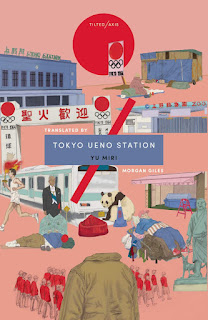
Tokyo Ueno Station by Yu Miri

Ah, one of the saddest books I read last year. Tokyo Ueno Station is set at its titular location, focusing on the ghost of a man named Kazu, who was a migrant labourer in life and who now haunts the station where he ended his life as a homeless man. Incorporating a number of events in Japanese history, from the preparation for the 1964 Olympics which Kazu worked during to the 2011 tsunami, Yu draws particular attention to the way these national events impacted the lives of Japan's poorest and most vulnerable citizens. This is done in no small part through the parallels between Kazu's life and that of Emperor Akihito, who was born the same year as him. In spite of this and numerous other coincidences in their lives, Kazu and the Emperor's lives are obviously and painfully disparate. This is not an easy book to read, but it is an emotionally powerful and important one nonetheless.
Something to Talk About by Meryl Wilsner

Okay, I promise this is the last book which will involve me redirecting you to my 4 Short Book Reviews post - I can't help it if my favourite books of the year all came around the same time! Anyway, this is a charming contemporary romance about a hotshot showrunner and her assistant, which somehow manages to escape the dodgy power-imbalance issues you would expect from such a setup while still taking advantage of the romantic tension it provides. I nurse a little gay hope that this book will eventually be made into a big gay movie, and my life will be complete. 

There There by Tommy Orange

I was ecstatic to find this book at a local library in Bahrain, having had it on my to-read list for some time. Written by Tommy Orange, a member of the Cheyenne and Arapaho Tribes of Oklahoma, There There follows the intersecting stories of twelve Native American characters in the lead-up to a pow wow in Oakland, California. Although the characters experience diverse issues in their personal lives - from mental illness, to abusive relationships, to foetal alcohol syndrome - a recurring theme across their stories is the idea of what it means to be a Native American in today's world, especially as an 'Urban Indian' living in a city. 

This was a beautiful and heart-breaking book, with a unique structure. I might have been doubtful of an author's ability to switch back and forth between characters and perspectives as Orange does in There There, but he pulls it off brilliantly. 

You Let Me In by Camilla Bruce

I bought this book (like so many in 2021) on a whim because the ebook was on sale, only for it to become one of my favourite books I've read in a while. This is an unsettling, Gothic tale of a girl whose life has been haunted from a young age by the mysterious Pepper-Man. He is seemingly a sort of fairy or fae, but not in the sense of the little winged pixies - Pepper-Man is more akin to the dangerous, vampiric and human-like fae of old folklore. The book is full of questions: is Pepper-Man real, or just a psychological manifestation of young Cassandra's childhood trauma? Is the adult Cassandra, a celebrated romantic novelist, responsible for the deaths of several family members, as many suppose her to be? How much of what Cassandra narrates throughout the story is real, how much is fake, and how much does she genuinely believe in?

This book gripped me from start to finish, and left me with a severe book hangover - a sure sign of a good book. I can't wait to read Camilla Bruce's next work, the equally fascinating-sounding Triflers Need Not Apply. If it's anything close to as good as You Let Me In, I will be a very happy reader.

Here Comes the Sun by Nicole Dennis-Benn

To give you some idea of how I found this book, know that one of the tags I applied to it on LibraryThing is "ruined me emotionally". I stand by this. Even thinking about some parts of it now, I feel the urge to cry or possibly scream - obviously this means I highly recommend the novel.

Here Comes the Sun is about three women (a mother and her two daughters) living and trying to survive in modern Jamaica. While the cover of the book might convince you that this is a light summer beach read, the plot is far from it. Some of the issues the book addresses include gentrification, sexual exploitation, homophobia, colourism, and generational trauma, among others. All of the characters are by turns infuriating and sympathetic, with their own struggles and reasons for the way they behave. They all felt incredibly real, which made certain parts of the book all the more heart-breaking. There is one particular part near the end of the book which I can't describe without spoiling it, but it gave me perhaps the most visceral feeling of devastation I've experienced from a book this year.

Tender is the Flesh by Agustina Bazterrica

Speaking of viscera... the premise of Tender is the Flesh is essentially: what if factory farming, but with humans? If that sounds absolutely repulsive to you, then you would be right. This book is disturbing and would definitely be classed as dystopian, if not outright horror fiction. Both of these genres are most effective when their outlandish plots reflect real-life concerns, and Tender is the Flesh does this very well. Reading the book, you start to believe that certain scenarios could genuinely lead to a situation like this, with institutionalised cannibalism becoming just another form of exploitation in society. You can also of course read the book as a reflection of the horrors of factory farms as they exist now, which naturally as a vegan did occur to me, but I won't delve into that too deeply. Suffice to say that if you can stomach it, this is powerful and gripping read. 

Kim Jiyoung, Born 1982 by Cho Nam-joo

I will keep this section quite short, since if you want to read more of my thoughts on Kim Jiyoung, Born 1982 you can simply read the previous post I wrote about it. For this post, suffice to say that this is a short but impactful novel about what it means to be a woman today, in Korea and beyond. If I had to recommend one book to a man to help him understand what it's like to live as a woman in the world of the 21st century, I think this might be the book I would suggest.

Margarita's Husband, A Fable of the Levant by Andriana Ierodiaconou

I read this book in the summer of 2021, as I wanted to read a book specifically set in Cyprus to continue my tradition of reading one book for every country I visit. I hadn't heard of this novel before and it didn't seem to have many reviews online, but I would happily agree with those few testimonials calling it 'a hidden gem'. Set on an island in the Levant which appears to be but is not named as Cyprus, this short book focuses on Homer Kyroleon, a 'wealthy Christian landowner, inveterate womanizer and local political figure', and the family members and local residents who surround him: his docile and sensitive wife Margarita, his rebellious son Adonis, his now-deceased daughter Polyxene, and Gethsemane, the young refugee who takes both Kyroleon and his son as lovers. This familial drama takes place against a backdrop of political and social unrest on the island, as anti-colonial, religious, and class tensions rise. 

***

With that, my list of the best books I read in 2021 is complete! It was quite a good year for reading, and I hope that 2022 can provide me with at least as many excellent books again. If you're reading this, feel free to let me know: Was this a good reading year for you? Did you have a favourite book or books you read in 2021?

Monday, 19 July 2021

Book Review: Willow Trees Don't Weep by Fadia Faqir

Dear readers, let me start this post with a quick apology. I'm sorry that this post didn't go up on Wednesday as planned, my only excuse being that this has been quite a busy week with job interviews and applications. Thankfully things have calmed down a bit now, leaving me with the time to give this post the attention it deserves. 

As I mentioned in the last post, this July I set out to read Fadia Faqir's novel Willow Trees Don't Weep by the middle of this month, a task I can now say was successful. I actually finished the book on around the 10th July, leaving me with enough time to finish another novel (the devastating Here Comes the Sun by Nicole Dennis-Benn) before it came time to start my second West Asian novel of the month. 

Let me not get off track though. This post is specifically about Willow Trees Don't Weep, not Here Comes the Sun or The Beauty of Your Face - although I'm sure that they are deserving of their own posts.

Willow Trees Don't Weep is a novel by Jordanian-British author Fadia Faqir, published in 2014. Its plot follows Najwa, a young woman in Amman whose family is left struggling after the death of her mother. Her father, Omar, abandoned his family to join the so-called "global jihad" when Najwa was just a baby, leaving Najwa and her grandmother to fend for themselves after Najwa's mother passes away. Fearing for their safety as lone women in a patriarchal society, Najwa and her grandmother decide that Najwa must leave Jordan and go to find her father. This quest takes her around the world, from Pakistan to England, following in the footsteps of her father as she tries to find out what happened to him. 

One of the things I liked most about this book was the character of Najwa. I thought she was an interesting, complex person, and I found her relatable even though her struggles were unlike anything I've ever experienced. Her mother renounced Islam and became determinedly secular after Omar left, associating Islam with the loss of her husband. This means that Najwa grows up feeling conflicted about her religious identity, torn between her mother's secularism and her grandmother's faith, while also being uncomfortably aware of the impact religion had on her father's path in life. 

On her journey, Najwa fluctuates between determination to continue to search for her father and teetering on the edge of a mental breakdown. I liked that Najwa came across as resilient without being stoic, and the way that her journey was not easy for her made it seem that much more realistic to me. Likewise, I appreciated Najwa's ambivalence towards her father. On one hand, she is actively seeking him out, missed his presence during her childhood, and wants him to come home to Jordan. On the other hand, she hates him for abandoning his family, for causing her suffering, and for the violent acts he took part in as a member of terrorist groups. 

While I appreciated Najwa's ambivalence about her father, I have to admit that my opinion on him was a bit more one-sided. Even though the book is interspersed with Omar's diary entries, starting from when he was in Amman with his wife and child and leading all the way up to his reunion with Najwa, I found him a difficult character to sympathise with. When you read about his experience as a doctor in a war zone, it's hard not to feel upset or nauseated by the descriptions of what he had to do, and of course I felt bad for him when he experienced the loss of those close to him in the fighting. However, I felt I didn't have that great a sense of what motivated him as a person, particularly what would compel him to leave his wife and young child. Omar more or less attributes this to a combination of wanting to protect his friend Hani, who was radicalised in Jordan, and wishing to get away from his nagging wife, but neither of those reasons seemed sufficient to me. They only felt flimsier later, as Omar's actions become worse and he gets ever deeper involved in Islamic totalitarian movements. It might have been enlightening to read from the perspective of someone who became so devoted to this cause and to perhaps understand what could motivate them to do some truly horrible things, but I felt Omar's account fell short of doing this. 

There were other things I liked and disliked about the book which are perhaps less central than these two main characters. I enjoyed the descriptions and imagery, and I found parts of the book very impactful emotionally. I wasn't so keen on the ending, nor the elements of the plot which seemed to pop up and then be more or less disregarded a few chapters later. While the book overall was intriguing and emotional, there was something of an unfinished quality about it. I would perhaps recommend this book to someone who is looking for work by a female Jordanian author, as I was, or to someone who wants to know more about Islamic totalitarianism and/or the conflict in Afghanistan - I can certainly say I came out of this book knowing more than when I went in. Overall, it was a decent book with some important themes, and I don't regret reading it. 

Wednesday, 7 July 2021

Jordan and West Asia Book Choices (From & About Asia Reading Project)

 As I promised last week, this Wednesday's post is going to focus on my book choices for month three of the From & About Asia reading project. This month is following the usual format whereby participants have to read one book from each of two categories (I will list them below, but for a more in-depth refresher please feel free to check out my masterpost on the project), this time restricted to Jordan and other countries in West Asia. These categories are:

Category I: a book by an author from that country

Category II: a book about the culture of the subregion where the country is from

For Category I, I have been reading Willow Trees Don't Weep by Fadia Faqir, who is a Jordanian woman writer and academic. I generally prefer to read books by women and realised this month that so far less than half of my books chosen for this project have been written by them, so for July I deliberately tried to choose books by women authors. Fadia Faqir is one such writer, but I didn't only choose her book for this reason. It also sounded like a poignant story of a young Jordanian woman who sets out to find her long-lost father, who abandoned his family decades ago to join a Jihadist sect in Central Asia. So far I have been enjoying the book, although parts of it are quite sad to read. I am motivated to keep reading and interested to see where the story goes.

For Category II, I am planning to read The Beauty of Your Face by Sahar Mustafah. While I believe Mustafah was born in America, she comes from a Palestinian family. I was a little hesitant to choose this book because I wasn't sure how much it focuses on the culture of Western Asia, but from what I've seen of reviews, I believe that it is informed by Mustafah's experience as a child of Palestinian immigrants. The protagonist of the book, like Mustafah, is a Palestinian-American woman living in the US. She is the head of a Muslim school for girls, and the story shows her reflecting on her life as a school shooter invades the building. I imagine that this book is not going to be an easy one to read, but at the same time it seems to address some very important issues and I have heard very good things about it. 

While this isn't exactly relevant to my book choices this month, I would like to mention that this is the first month in which I have actually scheduled my reading. In previous months, I just sort of told myself I needed to finish both assigned books by the end of the month, leaving it up to how I felt each day to determine how much I read on a daily basis. This month, I am approaching things a bit differently by giving myself a daily reading requirement: 20 pages a day. While my ebook reader seems determined to sabotage me, by showing my book progress in percentages rather than pages, I think that this breaks down a larger goal (reading two books in one month) into easily achievable chunks (20 pages a day). I have previously used this strategy when completing reading for university, so I am fairly confident it will work. That said, I will wait until the end of this month to judge its effectiveness and if it positively or negatively impacted my reading experience. 

So, that's all I have to share for now! I realise this is quite a short post, but I just wanted to give a quick update about my progress with the project and to let you know which books I am reading this month. There's a chance I may have finished Willow Trees Don't Weep by the time of next week's post, so that blog may well be a review of that book. If not, I suppose the topic will be a surprise!

Wednesday, 30 June 2021

June Reading Wrap-Up (From & About Asia Reading Project)

 This past month, most of my reading time has been occupied by two books:

- The Dead Lake by Hamid Ismailov 

- Mother Earth by Chingiz Aitmatov

These books constituted my self-assigned reading for the From & About Asia reading project's June reading requirements, which specified that I needed to read one book by an Uzbek author (The Dead Lake) and another book about the culture of Central Asia (Mother Earth). Since I finished these both quite close to the end of this month and so don't have time to write about each book in an individual post, I wanted to use this post as a sort of wrap-up in which I give my thoughts on both. 

Also, if you read the words "From & About Asia reading project" and have no idea what I was talking about, I recommend perusing my masterpost on the project and the posts I've made about it.

Let's start with The Dead Lake, as that is the book I read first out of the two. I mentioned in my previous post about it, which I wrote before actually reading the book, that I expected this to be quite a dark and disturbing book, perhaps even bordering on horror. When reading it, I was surprised to find that the book was definitely not of the horror variety, and it wasn't even as dark or disturbing as I expected. While there is certainly an element of existential horror in the book's key incident, in which a young boy enters a radioactive lake and ceases to grow after that point, there was a lot more to the story than just that. There was also humour, hope, and a lot left to the reader's imagination. 

I felt that The Dead Lake gave an immersive look at what it was like for young Yerzhan to grow up rural Kazakhstan, where global events feel at once incredibly distant and intimately close. When his uncle speaks of "the Americans" and nuclear bombs, it is as though he might as well be talking about aliens, the Cold War seems so far away. Yet when the houses in Yerzhan's area are shaken by test bombs, and his own growth is halted by exposure to radiation, you begin to understand that even a conflict which seems so remote can have devastating effects close to home. I think that the book's central plot point alludes to this deceptive dichotomy: when Yerzhan enters the lake, it is seemingly a minor event, the water showing no clear signs of its danger. The harm of the lake and the Cold War generally might not appear immediately, but that doesn't make them any less destructive.

Despite being written by a different author and set in what is now considered to be a different country, Mother Earth has a number of similarities with The Dead Lake. To start with, both books are set in rural areas of countries that - at the time the story takes place - were considered to be part of the Soviet Union. They both depict the mixture of pride and fear that comes with being part of the Soviet Union and show how the country's struggles (Mother Earth's with war and The Dead Lake's with nuclear weaponry) impact its citizens. While I expected The Dead Lake to be darker, Mother Earth was (in my opinion) the more emotionally devastating of the two. Its plot follows Tolgonai, a Kyrgyz farming woman, as she loses more and more of her family during WWII. Seeing Tolgonai's struggle was heartbreaking, perhaps more so because she always tries to remain a pillar of strength for her community and what is left of her family. The title of the book comes from the framing device used for the story, as it is narrated by Tolgonai through her conversations with a field, through which she speaks to Mother Earth. I thought that using Tolgonai's conversations with the earth in this way was very touching, showing us both the importance of the land to her while also stressing how alone she is. That said, this was not a book without hope. Throughout the story, Tolgonai holds onto the hope of life for her people and her family, and it is this hope which sustains her. 

I think I would recommend both of these books to anyone who wants to learn more about this area of the world and its history, as well as those who can appreciate a story even when it is difficult to read emotionally. Mother Earth was my favourite of the two, but I truly enjoyed both and could see myself reading more works by either Ismailov or Aitmatov. I had never heard of either of these books or authors before the From & About Asia reading project, so once again I'm pleased that this project gave me the opportunity to discover them and appreciate their work.

Next week, I will be continuing with the From & About Asia project by posting my choices for July, the country and region of which are Jordan and Western Asia respectively. So if you are interested in my progress with this project, keep an eye out for next week's post!

Wednesday, 16 June 2021

Review: The Disorder Collection (Part 2)

Last month I reviewed three books from Amazon's six-book Disorder collection, with the promise that I would review the other three later. Dear reader, that day has finally come. I actually read the other books a little while ago, before my free Kindle Unlimited trial expired, but I am only just now writing this review because my previous few posts have been wholly occupied by the From & About Asia reading project. If you haven't already, I recommend going back and reading the first post I wrote about the Disorder collection before reading this one, but the choice is ultimately yours.

With that explanation out of the way, let's get into these books. As you may recall, Part 1 covered Un-girls, Anonymous, and The Best Girls, leaving Loam, The Beckoning Fair One, and Will Williams for this post. Just as in the last installment, I will be reviewing these in the order that I read them, starting with:

The Beckoning Fair One by Dan Chaon

Out of the whole collection, this is probably my second favourite story (Min Jin Lee's The Best Girls having retained its top spot since Part 1). It's a creepy, suburban gothic, almost fairytale-esque story about a boy and his teenage sister, who develops a strange obsession with a young man in their town. While I admit I'm not entirely sure what to make of the story's emphasis on the apparent danger of teenage female sexuality, I was a big fan of the story's atmosphere and generally eerie vibe. I also liked that Chaon wasn't afraid to make it a genuinely weird story, especially towards the end. It might be bizarre and even a little disturbing, but it definitely left an impression. 

Loam by Scott Heim

Like The Beckoning Fair One, Loam focuses on a group of siblings from a small, creepy American town who are somehow involved in strange goings-on. This was certainly an unsettling story, with one part in particular making me regret reading it in bed at night, but I didn't like it as much as Chaon's. It wasn't as effectively atmospheric, was quite slow to get going, and lacked a satisfying resolution. I was disinterested at the start, got my hopes up about half way through, and then felt disappointed by the end. It also bothered me a bit that [SPOILER, highlight to view] the crux of the story focuses on false accusations, including of sexual assault. Stories like this are getting to seem horribly overdone at best, and encouraging scepticism of survivors at worst. Even without that, though, I'm not sure I would have been terribly impressed with this story.

Will Williams by Namwali Serpell

This book is apparently based on an Edgar Allan Poe story which, full disclosure, I haven't read. I mention that because this story might have special resonance for those who have experienced the original, but unfortunately I do not fall into this category. Will Williams tells the story of its eponymous (and supposedly pseudonymous) main character, who is haunted from childhood onwards by a mysterious doppelganger of sorts: a boy who shares his name and gradually comes to assume other aspects of his identity. I found this story quite unnerving, which is probably a good thing, since the story is somewhat frightening. I appreciated how Serpell connected the concept of a doppelganger to social issues like the school-to-prison pipeline, which gave fresh meaning to an old trope. That said, I didn't find this story as immersive or its main character as compelling as some of the others in this series, so I wouldn't rank it as one of my favourites.

***

With that, we have reached the end of the Disorder collection. While I did enjoy reading this collection, I'm not sure if I would recommend it that strongly. The Best Girls is definitely my favourite and I would recommend that as a standalone story, as well as possibly The Beckoning Fair One if you want a straight-up horror tale, but I'm not sure I would do the same for any of the others. If you already have Kindle Unlimited and are looking for something a little strange and unusual, I would say go ahead and read the collection - or at least some of the stories in it. If you'd have to purchase it though, I would say to spend your money on something else. 

Friday, 11 June 2021

Uzbekistan & Central Asia Book Choices (From & About Asia Reading Project)

Note: Apologies for the late post! I wrote this on Wednesday and intended to post it that day, but I felt a bit unwell and basically... forgot to post it. So here it is now, a few days late.

Hello, loyal readers! Welcome back to another update on my progress with the From & About Asia reading project. If this is your first time hearing me mention this project, I recommend having a look at my masterpost here and reading my first post about the project, in which I explain how it works and what I am attempting to do.

For those of you who have been following my reading within the project, you will know that I recently finished last month's readings for May/North Korea/East Asia, and I am now working on my choices for June/Uzebkistan/Central Asia. Although I haven't finished any of June's books yet, I thought it my book choices might be of interest regardless and so I decided to share them here.

At the moment, my choices are as follows:

Category I (a book by an Uzbek author): The Dead Lake by Hamid Ismailov

Category II (a book about the culture of a Central Asian country): Mother Earth by Chingiz Aitmatov

Hamid Ismailov is, from what I understand, one of the most well-known authors to come out of Uzebkistan. This probably explains why his books are much easier to find online than many other Uzbek authors, and also why so many of us in the From & About Asia Discord group are reading his books this month! Interestingly, his books are actually banned in Uzbekistan and the author himself was forced to flee his home country after Islam Karimov's regime accused him of opposing the government (according to Wikipedia).

When googling Ismailov, I was surprised to find that one of his novels, The Devils' Dance, has actually been on my to-read list for years. Sadly, I decided not to read this book for the project as I couldn't find it in ebook form and it seemed a bit too long - I'm trying not to be too ambitious with my reading choices this month. That said, I hope that I might be able to read it in the future if I can get hold of a copy, especially if I enjoy the book I did choose.

In case you were wondering, my alternative Ismailov book choice was The Dead Lake. I came across this novella while searching for Ismailov's works, and the title and the plot summary really grabbed me. Set in Soviet-controlled Kazakhstan, The Dead Lake tells the story of Yerzhan, a boy who is doomed to a sort of eternal youth after a tragic event in his childhood. In an attempt to impress the girl he is in love with, Yerzhan dives into a radioactive lake that has been contaminated by the atomic bombs detonated nearby. This permanently stunts Yerzhan's growth, leaving him forever stuck in the body of a young boy.

While this plot is definitely disturbing, I also found it darkly fascinating. I have never heard of a story quite like this, so I'm intrigued to know where Ismailov will take it. My copy was released as part of the publisher Peirene's Coming of Age series, so I'm guessing that it will be a sort of bildungsroman - albeit one with elements of magical realism and horror, if the summary is anything to go by.

As for my choice for Category II, I have decided to go for Mother Earth by Chingiz Aitmatov. I decided quite early on that I wanted to read a book from Kyrgyzstan, because I have an aunty from there. Mother Earth is actually the book she chose for me after I asked for her reading recommendations, since I figured she probably knows the landscape of Kyrgyz literature better than I do! If you're reading this, thank you for the suggestion Aunty!

I know less about Aitmatov than I do about Ismailov, but from what I understand he is an important figure in Kyrgyz literature. Like Aitmatov, he wrote in Russian (as well as Kyrgyz). There are a few of his books which interest me, particularly his first novel The Day Lasts More Than a Hundred Years, so if I enjoy reading Mother Earth I will have plenty more of his work to explore afterwards!

I believe that Mother Earth is about the struggles of a Kyrgyz woman named Tolgonay, who has lost most of her family during the the Great Patriotic War and afterwards. I don't want to find out too much more in case I see spoilers, but my aunty has warned me this is quite a sad story! I suppose I'll have to read it to find out... but only once I've finished The Dead Lake.

So, those are all my choices for this month's books. I am excited to read both of these, partially because they sound so interesting individually but also because they will be the first books I have ever read from their respective countries. I love reading books from places I've never previously read about, so I'm happy the From & About Asia reading project is giving me the opportunity to do more of that this summer. Hopefully I will finish both of these before the end of the month and probably post book reviews for both of them, so keep an eye out!

Wednesday, 2 June 2021

Book Review: The Accusation by Bandi (From & About Asia Reading Project)

Hello, and welcome to another post about the From and About Asia Reading Project! Those of you who have read my previous posts about the project (and if you haven't, I recommend perusing my masterpost here) will know that I have been participating in it for the last month. This has meant choosing and reading two books, one for each of the following criteria:

Category I: a book by an author from that month's country

Category II: a book about the culture of the subregion where the country is from

May's country was North Korea, meaning that my Category I choice had to be a book by a North Korean author. For this, I chose The Accusation by Bandi. As for my choice for Category II, I have actually already written a post about the book I selected, Kim Jiyoung, Born 1982, which I ended up reading first for reasons I have specified in that review. Hopefully next month I will manage to read the books in what seems to be the correct order! My choices for June will come later, though. For now, let's get back to the topic of The Accusation

As far as I can tell, The Accusation is a very unique book in terms of North Korean literature, at least among those books which have been translated into English. While there have been many books written by North Korean defectors, The Accusation is the first I have heard of that was critical of but written by someone still living within the regime. The pseudonymous author, Bandi (whose name means "firefly" in Korean), wrote the collection of short stories secretly and hid his manuscript until a family member who defected was able to help him get it out of the country. The manuscript was then picked up for publication, and the rest is history.

The fact that The Accusation is so unusual made me determined to read it, even though I normally struggle with short story collections. Its stories follow different members of North Korean society as they live life under their country's oppressive dictator. Bandi definitely doesn't hold back from criticising the regime, with every single story drawing attention to its hypocrisy and brutality.

I admit I was a bit surprised by this. Somehow I thought that the stories (at least some of them, anyway) would show the reader a less critical look at daily life in North Korea, showing in some ways the normality of it for those who live inside the system. Instead, I found that the oppression of the North Korean state hung over the stories like thick smoke. It wasn't possible to look for metaphorical gaps in the regime, where perhaps some light might be able to slip through, because its influence was so suffocatingly absolute. It was disturbing to read story after story where the basic humanity of North Koreans was crushed inside the iron fist of the Kims' dictatorship.

For me, the standout story of the collection was definitely "The Stage", a heartbreaking tale of a family fractured by the son's desire to live, in his words, as a human being. A prominent theme in this story was the idea of "stage truth", which is described within the text as: "how actors perform a given play as though it were real life. To lie, in other words, but convincingly, so the audience will believe it is the truth."

Bandi extends this concept of stage truth to the behaviour of North Korean citizens within the regime, who are forced not only to perform whatever actions they are told to but also to do so believably, to convince their superiors that they are doing so out of a true inner devotion to the state and its ideals. I found this to be a very powerful comparison, which Bandi illustrates painfully well. Trying to comprehend the intimate, psychological oppression of the North Korean state is a task as horrible as it seems essential to understanding the lives of its people.

It's sort of difficult to review this book as I would another work of fiction, because I am aware of the horrible reality that inspired Bandi's stories. I feel like it's almost disrespectful to say "this is a great book, 10/10 would recommend", but I do want to say that it was a powerful and insightful book to read. If you are interested in North Korea or want to learn more about the struggles of the North Korean people, I would indeed recommend The Accusation. If the story surrounding the book's origins is true, then we are very lucky that this collection made it out of the country and into English-language publication. Bandi is an incredibly brave writer, and we are all fortunate to be able to read his work.

Wednesday, 26 May 2021

Book Review: Kim Jiyoung, Born 1982 by Cho Nam-joo (From & About Asia Reading Project)

A few weeks ago, I wrote a blog post about joining the From and About Asia reading project, which requires me to read two books about Asia every month (actually the rules are a bit more complicated than that, but we'll get into more detail in a second). Earlier this week, I had the pleasure of finishing my first assigned book for the project: Kim Jiyoung, Born 1982 by Cho Nam-joo.

For those of you who need a refresher of the project's book criteria, let me give you a quick reminder. Each month focuses on a different country in Asia, May's being North Korea, and then requires you to read one book for each of the following categories:

Category I: a book by an author from that country

Category II: a book about the culture of the subregion where the country is from

Funnily enough, Kim Jiyoung, Born 1982 actually fits into the second category here, even though I finished it before my Category I choice. The reason for this is that I'm  reading my other North Korea book (The Accusation by Bandi) as part of a buddy read that continues until the end of this month. So, I have somewhat counterintuitively finished my Category II book before it. 

I will admit I was a little confused at first as to what book I should choose for this category. I ended up choosing Kim Jiyoung, Born 1982 because I already owned a digital copy, I'd heard other feminist readers rave about it, and I liked the idea of reading one book from North Korea and another about South Korea. It seemed to fit the criteria for a book that looks at an East Asian subculture because it follows the life of the eponymous main character as she navigates life as a woman in South Korea. The story takes us from before her birth to her becoming a mother herself. Along the way, it tackles a variety of issues relating to sexism and patriarchy, all seen through the lens of Jiyoung's experiences.

One of the blurbs inside the book claimed that "Kim Jiyoung's life is made to seem at once totally common-place and nightmarishly over-the-top", which I admit I found quite strange. While I would agree that Jiyoung's life is both commonplace and nightmarish, there is nothing over-the-top about it. Everything she goes through is totally normal, even if the anti-feminist instinct to deny these experiences is so strong that Cho Nam-joo had to include actual citations within the text. Given that the book is written from a South Korean perspective and set in that country, Jiyoung's life is specifically that of a Korean woman, and her experiences with sexism and misogyny reflect that. For example, I think that perhaps the issues of sex-selective abortion and ideas about honour and tradition in families (and how this affects gender relations within them) are perhaps more particularly significant in Korea. 

On the other hand, as the great Mona Eltahawy said, "Patriarchy is universal." So much of what Jiyoung experiences is relatable even to me as a woman who has never so much as visited Korea. Being sexualised from a young age, encountering predatory men as a child, being told that as a girl you can't do things that boys your age are doing, having your choice of clothing constantly analysed and controlled, being harassed by men on the street, being told that this harassment is your own fault, living in constant fear of the violence you know other women like you have experienced, feeling a dull sense of inevitability when you finally experience that violence yourself - all of these are things that Jiyoung, myself, and countless other women worldwide have gone through. 

I know that some people reading this, specifically men, will probably hear my description of the book and think, "I'm not sure this is for me." Maybe you don't like reading so-called "feminist" literature or maybe you just feel like this book would be a bit too intense for your liking. Unfortunately, the women in your life don't have the opportunity to opt-out of sexism and misogyny like you can opt-out of reading a book which focuses on them. If I could, I'd get all the men I know to read this book, if only so they can see (however briefly) the relentless patriarchal onslaught that comes with going through life as a woman.

That's not to say that only men would benefit from reading this book, of course. Reading it as a woman made me feel very validated and vindicated in my anger at systemic sexism. I think this book deserves a place as a new feminist classic for how well and concisely it depicts the reality of being a woman in the modern world. It doesn't depict every single aspect, as I'm sure no book really could, but it depicts the life and experiences of one woman and it does so incredibly well. 

For those who have also read and enjoyed this book, like me, I would like to recommend two other stories you may enjoy. Kim Jiyoung, Born 1982 reminded me a lot of The Vegetarian by Han Kang, since both depict Korean women whose conflict with the patriarchal society that surrounds them has manifested itself internally as a mental illness. The Yellow Wallpaper by Charlotte Perkins Gilman is a short story that shares a similar plotline, albeit from an American perspective. I was also reminded of Min Jin Lee's short story The Best Girls, which I mentioned in a previous post. Like Kim Jiyoung, The Best Girls gave insight into the lives of Korean women and how young women can be expected to make sacrifices for the sake of their brothers, simply by virtue of their gender.

I would like to write more about this book, going through every aspect of patriarchy which is addressed in the novel and talking about how relatable it all was, but to be honest I could not say any of this better than the book does itself. That said, if you'd like to read more of my thoughts, I made a short post about the book on Instagram and also shared a few quotes from it there. Otherwise, I would suggest reading Kim Jiyoung, Born 1982 if you want to know more. It's only a short book so it doesn't take long to read, but its impact will stay with you well after the last sentence.

Wednesday, 19 May 2021

Review: The Disorder Collection (Part 1)

Recently I decided to make use of Amazon's 30-day free trial on Kindle Unlimited, a service which lets you borrow as many books as you want from Amazon's selection for a flat monthly fee. I have no intention of paying this monthly fee or otherwise using this service outside of my free trial, but I couldn't resist the opportunity to read some (temporarily) free books. So, I am trying to read as many books from the Kindle Unlimited library as I can before my trial runs out.

Some of the books I have been reading during this period are those in Amazon's Disorder collection, a series of short stories and novellas by six different authors. While the individual plots vary, the stories are united thematically in that they each deal with semi-realistic but disturbing and unsettling events. I definitely preferred some stories over others, but so far they have all delivered on their promise to "get inside your head" and provoke feelings of mild to severe horror. In this post, I am going to take you through three of these stories and give you my thoughts on them, with the other three reviews coming in a later post.

Now, before I get into the individual stories, I feel the need to address the unethical elephant in the room: Amazon. Unfortunately, this short story collection is an Amazon original project, meaning that the stories are published by and primarily sold through Amazon. This is a problem, given that I consider Amazon to be a harmful and morally reprehensible company. They monopolise the online shopping market, dodge taxes, and mistreat their workers. I am normally so reluctant to promote their website on my blog that I will even censor the company's name, so you can imagine that I was unsure whether or not to review these books here. 

In the end, I decided to review these books anyway in the interests of supporting the authors, not Amazon. That is not to say that my thought process negates any harm I might be doing by supporting such a horrible company, and I can absolutely respect that some people may not want to purchase these stories due to their proximity to Amazon. It's a sad fact that Amazon's growth has become something of a vicious circle, making it harder and harder for people to avoid interacting with the company, as their market dominance grows and "ethical consumerism" becomes more and more of a challenge (especially for those of us without much money to spare). All of that said, I am very happy to hear others' perspectives on this, especially if you hate Amazon as much as I do and have suggestions for how we can avoid supporting them. 

Also, just to reiterate: the Kindle Unlimited free trial lasts a month and will run for the full 30 days even if you "cancel" it immediately after subscribing, so you won't have to pay any money. Just saying.

***

With that out of the way, let's get into specifics. As I mentioned before, the series is comprised of six stories by six different authors. Although the evil A-site lists them in a specific order, as far as I can tell this is arbitrary and the stories can be read in any order you want. I am listing them in the order I read them, so you can see how my perception of each story was impacted by the ones I read before it.  

The Best Girls by Min Jin Lee

This was the book that first piqued my interest in the collection, with an intriguing plot summary and an author who I'd heard great praise for (Min Jin Lee being the author of Pachinko and Free Food for Millionaires, both popular novels). Having now read half of the books in the set, The Best Girls remains my favourite so far. It's a haunting story of gender roles and family sacrifice, specifically how they manifest in Korean culture. I thought this story was powerful and felt very real - perhaps especially because it turned out to be based on a true story. Min Jin Lee's writing is emotionally-affecting without being overly sentimental, and the twist at the end truly shocked me. 


Anonymous by Uzodinma Iweala

This story was a disorientating read, in a way I believe was intentional on the part of the author. It focuses on a Black American man who is stopped by border security upon his arrival back in US. What follows is horrific in its reality, but more so in its apparent meaninglessness and absurdity. Iweala gives a great sense of the helplessness and isolation of the protagonist, made all the more painful by the knowledge that things like this are far from just fiction for people of colour around the world. More than anything else, it is the existential horror of Anonymous's brutality that sticks in my mind.

Ungirls by Lauren Beukes

The plot summary of Ungirls sounded perhaps the most ambitious and definitely the most fascinating of the six stories, which is maybe why the result felt a little disappointing. Dealing with plot points ranging from sex dolls to prostitution to doxxing to mass shootings to Jordan Peterson-esque public speakers (I mean come on, we all know that was meant to be a Peterson clone right?), the story pulled together a lot of threads but fell just short of tying them together. I think Beukes has a lot of fascinating ideas, like the connection of the Barbie Liberation Organisation to sex doll production, but this book didn't quite do them justice. Ungirls would probably have worked better as a full-length novel or a slimmed-down short story. As it is, it sort of awkwardly straddles the two. That said, it was still thought-provoking and I don't regret reading it.


***

With that, we have reached the end of Part 1 of this review. Please stay tuned (subscribed?) for the next instalment. In the mean time, please feel free to share your thoughts on these books in the comments. I would also very much like to hear your feelings about Amazon and whether we can use it to purchase books while still remaining ethical. 

Wednesday, 12 May 2021

My Favourite Bookish YouTubers

Good morning/afternoon/evening, gentle readers! I hope that this post finds you all well. 

While some of you might be expecting, based on my last post, for this blog instalment to focus on the From and About Asia reading project, you might have guessed from the title that this is not actually the case. If so, you would be correct. Today's post is on a different topic, since I haven't actually finished any of my books for the reading project yet. Instead, we're going to be looking at a different side of internet-related bookishness: booktube. 

For those who haven't heard the term before, "booktube" refers to the side of YouTube where people talk about books. I am interpreting this word quite broadly here and not limiting it just to those who describe themselves as "booktubers". Rather, I am including YouTubers who frequently talk about books, even if that is not necessarily the primary or sole focus of their channel. 

Booktube is something I only got into in the last few years or so. Considering that popular booktubers such as Rosianna Halse Rojas and booksandquills's Sanne have been uploading book-related content for over a decade, I am a relative newcomer to the scene. I think for some years I was put off because booktube seemed dominated by videos about YA books, a genre which I don't read much of. However, this is not really the case, as booktubers make videos about a wide variety of books, from fiction to non-fiction, from YA to literary novels. After becoming aware of this, I was introduced to dozens of booktubers who were not only fun and informative to watch, but who also focused on books which were actually of interest to me.

In this post, I'd like to share some of my favourite booktubers (or, more broadly, bookish YouTubers). They range from lesbian fiction reviewers to rapper-historians who also recommend books, but what they all have in common is that I have watched and enjoyed all of them - and found out about some good books along the way.

(Also a quick note on pronouns and gender: for all of the people mentioned on this list, I have attempted to find out their pronouns. I will obviously use the correct pronouns for those who have specified them in any of the sources I can find, but for the others I will be using they/them. If anyone notices that I have been using the incorrect pronouns, please do let me know and I will change them ASAP!)

The Bookish Land

The first YouTuber I wanted to talk about is one I have mentioned before, as both my favourite booktuber and the creator of the From and About Asia Project: The Bookish Land. I believe that this is the name of their channel and the creator actually goes by Meonicorn online, although I am happy to be corrected on this if anyone knows for sure! Anyway, their channel is a full "booktube" one, as it focuses almost entirely on books. They review books, recommend books, make videos about their TBRs, and even do vlogs where they visit bookshops all around the world. There are two things that I especially like about their videos: they always have international, diverse reading choices, and they always give well thought-out, insightful opinions. They seem to approach their reading and reviewing with a sensitivity and compassion that I greatly admire.


Jess Owens

The second YouTuber I'm excited to mention is someone who I only discovered recently, in comparison to the others on this list, but I have been enjoying their videos so much that I had to include them: Jess Owens. While Jess Owens does make a variety of bookish videos, including reviews and reading wrap-ups, what I would most like to draw attention to is their Book CommuniTEA series, where they break down all the latest drama in the bookish community. I think this series is brilliant because it perfectly fills a niche and I haven't seen anyone else of YouTube make videos about book drama quite as well as Jess Owens does. They do a great job of digging through complex social media drama (where most of these things take place, naturally) and presenting it in a digestible way. Their Book CommuniTEA series is clearly well-researched and provides a mostly-neutral perspective on recent events, although I also appreciate when Jess Owens offers their own opinions as well. Jess Owens's videos are smart, thought-provoking, and present controversial topics in a way that is balanced and compassionate. On top of all this, they also have an absolutely adorable dog named Nigel, who features in their videos! 

Akala

While Akala is perhaps not a booktuber in the strictest sense of the term - being a writer and hip hop artist primarily - he is still someone whose thoughts on books I value very highly. His series Akala's Great Reads shows him going into detail about the books he considers to be important or influential, ranging from non-fiction works like A Dying Colonialism to sci-fi novels like Dune. Each video is short, only a couple of minutes long, and focuses on a single book. For every book, he introduces it, gives a short explanation of its topic, and then explains why he believes it's worth reading. While I don't necessarily agree with Akala on every book he recommends (the same being true for every booktuber, I suppose), his reasoning behind each suggestion is always profound and grounded in how the books affected him personally. Even for books I absolutely do not enjoy, like Bradbury's Fahrenheit 451, hearing Akala praise them has made me reconsider the books and whether they might have value which I didn't initially see. It probably helps that, in my opinion, Akala is one of the greatest public intellectuals around at the moment, and he is a talented author in his own right (I highly recommend his non-fiction book Natives: Race and Class in the Ruins of Empire, and his new novel The Dark Lady is coming out soon). He also posts spoken excerpts of Natives on his YouTube channel, alongside his music, behind the scenes conversations, and short lectures expressing his thoughts on a variety of topics. 

Danika Leigh Ellis

Danika Leigh Ellis, Book Riot contributor and creator of the wonderful Lesbrary website, has been posting about queer women's literature online for longer than I have been out. She is, in my mind, one of the biggest icons of WLW book reviews on the internet. While the Lesbrary focuses exclusively on LGBT+ books (primarily of the bisexual and lesbian variety), Danika Leigh Ellis's YouTube channel is somewhat broader. Her videos are often on queer books, but sometimes they are on non-LGBT books too. I have so much respect for Danika Leigh Ellis for bringing queer women's books to wider recognition and for carving out a section of the internet by and for people like us. Back when I was a baby gay and first beginning to look for queer books, I remember coming across the Lesbrary and Danika Leigh Ellis and feeling like I'd found the holy grail of queer women's literature. They continue to review and promote bi and lesbian books now on both their own YouTube channel and Book Riot's, and I really appreciate how they show the true breadth of gay women's literature - it's not all tragic, Well of Loneliness-type novels! If you are interested in books by and about queer women, you need to check out Danika Leigh Ellis's work. 

A Sunny Book Nook

Speaking of people who talk a lot about sapphic books, I think it's time to introduce you to the fifth booktuber of the post: A Sunny Book Nook. First of all, how cute is that channel name? It's so catchy and makes me happy just saying it. The brains behind this channel is in fact a creator called Sunny, who makes book videos including (but not limited to) those about queer women and non-binary people! I love that she recommends a diverse range of books, from graphic novels to political polemics. Politics-wise, Sunny is quite openly a leftist and often analyses books through a socialist and anti-capitalist lens. On top of all this, they are also amazing at makeup and sometimes create looks based on book covers. Just look at her makeup in this Instagram post! If you want a YouTube channel that is intellectually, aesthetically, and bookishly stimulating, look no further than A Sunny Book Nook.


***

With that, dear readers, we have reached the end of this list. I hope that you enjoyed reading about my favourite booktubers (or bookish YouTubers) and perhaps found a new channel to explore - or perhaps you already knew of these amazing creators, in which case I must say you have excellent taste. 

Please feel free to let me know if there are any particular bookish YouTube people that you would recommend, as I'd love to watch some more. Also, please tell me if you enjoyed this post and/or would like to hear about more YouTube creators I like, because I definitely have more that I haven't mentioned here! I'd be happy to do a part two to this post if that's something people would be interested in. 

In the meantime, happy reading and happy watching!

Wednesday, 28 April 2021

Book Review: Technology vs. Humanity by Gerd Leonhard

Following criticism that my previous post was "a clear cop-out" and "not at all relevant to media, as this blog is supposed to be" - most of that criticism coming from the writer herself, but still - I have decided to write a proper, media-centric post this week as an apology. This post will be a review of a book I recently read, Technology vs. Humanity: The Coming Clash Between Man and Machine by Gerd Leonhard.

I bought this book about a month or so ago and only finished it around last week, but I'd been interested in reading it for several years before that. As you can probably tell from the title, Technology vs. Humanity focuses on current and future conflicts between humans and machines, a topic which has long been of interest to me. Leonhard's book tackles this subject in quite a broad fashion, giving general overviews of recent technological progress and suggestions regarding what these advancements could lead to in the future. The author also stresses the philosophical aspect of the issue, discussing the need for ethical guidelines in the development of technology. Leonhard frequently breaks these down into lists, such as "seven existential questions to ask" and "nine suggested principles", which are less doctrinal than they are aimed at promoting conversation around technological ethics. 

For better and worse, Technology vs. Humanity is quite a basic book. Aimed at the general tech-using population rather than experts in the field, it provides a broad overview of relevant topics from technological "megashifts" to digital obesity. In some ways this works to the book's advantage, making it relatively accessible and a good jumping-off point for larger discussions, but a little extra depth (perhaps in the form of more detailed analysis or specific examples) could have taken the book from general to comprehensive. One also doesn't have to read very far into the book before they get the sense that it's moving in a somewhat circular direction, repeating the same points without really building its argument. I feel like you could read any one chapter of the book in isolation and come away with an accurate sense of Leonhard's perspective, without the need to read the rest of it.

Speaking of Leonhard, I did find the self-promotion in the book to be a little jarring. A passage about his concept of HellVen (hell/heaven) is interrupted with "#hellven", seemingly encouraging readers to tweet or otherwise post on social media with this Leonhard-affiliated hashtag. In a section about the need for a global council on technological ethics, the author adds "This writer is happy to chime in!". Even the very end of the book calls the reader to "join the discussion" at two of Leonhard's websites. While I understand the need to promote one's self in today's digital landscape, it felt at times like the author was taking a huge, world-shifting issue and using it for his own career promotion. This sounds a bit harsh, and I'm sure that Leonhard didn't intend it this way, but the effect remains.

While I take minor issue with the way Leonhard presents his perspective (the shallowness of the book, his self-promotion), I would like to say that I do agree with his points. He is clearly someone who has devoted a lot of thought and a deal of research to this issue, and I believe he is genuinely concerned for the implications of this so-called "coming clash between man and machine". I appreciated that he is not afraid to call out the role of capitalism in potential runaway technology, emphasising that the producers of such technology will naturally prioritise profit over ethics. I certainly also support his argument that we need to put in place ethical restrictions, and perhaps in some cases even barriers, to prevent technology from advancing in such a way that it hurts rather than helps humans. We must be sure not to, as Leonhard put it, "pursue efficiency over humanity".

Overall, I would say that Technology vs. Humanity does what it sets out to do, in that it manages to "highlight the challenges, start the debate, and provoke a spirited response" with regard to an issue that is in urgent need of attention. It provides a good introduction to the ethical problems of technological advancement and definitely works as a starting-point for deeper and more detailed discussion. I would recommend this book to those who, like me, don't have a great deal of technological knowledge but are still concerned about (or at least interested in) the impact of technology on the future of humanity. 

Wednesday, 7 April 2021

5 Books I Abandoned

Generally speaking, I don't like to abandon books. I normally try to finish them even when I'm not enjoying myself, if only out of spite. I need to be able to write a scathing review of them after all, and I can't exactly do that if I haven't read the whole thing. I'm half joking, but on the other hand the book may actually improve halfway through and make me thankful I decided to finish it. Whatever the reasoning for that particular book, the point is that I don't usually like to leave a book half-read.

But there are always exceptions. In this post, I'm going to list five books that I have abandoned halfway through, for a variety of reasons. Some of these I would like to attempt to finish sometime in the future; others I would happily never read a word of ever again. 

It by Stephen King

I really tried with this one. I first attempted to read It one Halloween many years ago, getting approximately 50% of the way into the story before abandoning it. I didn't exactly mean to drop the book, instead gradually losing enthusiasm until eventually I realised it had been three months and I hadn't picked it up once. Since then, I've tried a few times to make it to the end of the book (I always pick it up again from where I left off, because I feel I remember it well enough and I can't bring myself to slog through all those pages again), but never to any success.

I think the main thing that put me off was the "teenage werewolf" scene, in which the titular antagonist It transforms into - you guessed it - a teenage werewolf. The scene felt comical rather than scary, and it jolted me out of the otherwise very creepy story. I enjoyed other parts of the book though, plus it's about time I read a Stephen King novel from cover to cover. Perhaps 2021 will be the year I finally manage it?

The Men Who Stare at Goats by Jon Ronson

I can't for the life of me remember why I initially bought this book, but it may well have had something to do with the vaguely-amusing title. If the title is funny though, the book's content certainly is not. It begins by detailing the US military's attempts to literally weaponise New Age ideas, in a narrative which quickly veers from humorously bizarre to incredibly dark. Reading about the US military's torture methods was too much for me, and I quit around the point when the book started talking about the atrocities committed at Abu Ghraib. I don't think I'll ever read this one again.

If You Follow Me by Malena Watrous

Perhaps more than the other books on this list, I expected to enjoy If You Follow Me. It's about an American woman who moves to Japan with her girlfriend to start work as an English language teacher. That ticks at least three interest boxes for me from the summary alone. Sadly, the book didn't live up to my admittedly high expectations. I found the main character unsympathetic, her infatuation with her male supervisor uninspiring, and her and her girlfriend's "culture shock" to paint them more as frustratingly inconsiderate rather than pitiable.

The final straw came when there was a horrible scene involving the death of a pet cat, something which is personally very upsetting to me and which I don't like to see in fiction. The book wasn't worth continuing with after that.

Riddley Walker by Russell Hoban

I hadn't heard of this novel until it was assigned to me as part of a course on dystopian literature at university. In theory, it's a fascinating concept for a book. Set in a post-apocalyptic, post-nuclear-bomb future that is almost unrecognisable to the reader, it's written in an incredibly unique style as well. The idea seems to be that the book is written more or less as the narrator would write it, complete with idiosyncratic speech and irregular grammar and spelling. Words that we are familiar with have been distorted with the passage of time and the breakdown of society, meaning that terms like "Prime Minister" are now "Pry Mincer". To give you an example, here's an unedited excerpt from the book:

“I stil aint qwite said how it wer. Not like a diffrent country. It wer mor like I wer behynt the back clof in a show. Thats how it wer. Thru the clof I cud see the other figgers moving I cud see the peopl watching only no 1 cud see me. If I wer a figger in a show what hand wer moving me then? I cudnt be bothert to think on that right then. Theres all ways some thingwl be moving you if it aint 1 thing its a nother you cant help that.”

As you can tell, reading this requires some effort on the part of the reader, although the amount of struggle it requires varies. I had a friend on the course who could read the book easily, whereas I had to trudge through it by reading each sentence aloud and attempting to decipher it. 

I do think that the concept of the book is fascinating and its style is very effectively immersive, so I would like to make it through the whole thing someday. I'm just not quite sure when that will be.

The Devil All the Time by Donald Ray Pollock

Finally, we have this relatively new Southern Gothic book that was recently adapted into a film on Netflix. I absolutely do want to finish this one before watching the film, so please, no spoilers for either! 

The main reason I stopped reading this one is because I had to return it to the library, but there are two other reasons why I couldn't finish it in time before returning it. The first is that two plotlines in the story (there are several) seemed to have somewhat homophobic undertones, which diminished my enthusiasm a little. The second reason is that I was having trouble sleeping around the time that I got this book, and I decided that reading it before bed wasn't likely to help with my lack of sleep and nightmares, seeing as the novel can get quite dark and violent at times. The combination of the two meant that I didn't manage to devote the time needed to finish it before the library needed it back, so I ended up returning it only partially-read.

I think this is the book on the list I'm most likely to finish, and hopefully I will do so soon, as I recently bought an ebook copy to allow me to finally get to the end of the story. Fingers crossed the end is worth it!

***

Have you read any of the books I mentioned on this list? If not, do you have any books you abandoned partway through, and if so, do you intend to finish them someday?

I'd also really like to know what people think of the Riddley Walker excerpt I included here. I really struggle to read it, so I'd be curious if others find it easier or harder than I did.

Wednesday, 24 March 2021

The Anti-TBR Tag (Books I Never Plan on Reading)

I was browsing YouTube the other day, as I so often do, when I came across a tag used by booktubers (YouTubers with book-focused accounts) that caught my eye. Originally created by the channel Nicole & Her Books, the anti-TBR challenge is a twist on the usual TBR (to be read) lists. Rather than focusing on books that you intend to read, the anti-TBR features books which you are probably never going to get through.

Like a lot of people who love reading, I struggle with the fact that I can never possibly read all the books in the world, not even all the ones I want to read. The anti-TBR's charm lies in embracing this fact, allowing book-lovers to approach their reading with the aim of curating their choices, rather than feeling as though you have to read everything. This seems quite a liberating idea to me, and I especially like it since a lot of the books deemed part of the classic Western canon (and thus often considered must-reads) are those written by and focusing on white, cishet, English-speaking men. Embracing the idea of an anti-TBR opens up the possibility of exploring authors beyond the supposed "greats" of literature and allowing us to appreciate authors who have received less attention than they deserve.

While this is a tag that originated on YouTube, I have seen examples of people doing it in blog post form as well, so I wanted to give it a go myself. The challenge includes eight questions/categories, for which you choose one book, author, or series each. I have listed the questions below in bold, with my answers underneath. Please feel free to read through them and let me know how you feel about my choices - I have no doubt some will be controversial!


1. A popular book EVERYONE loves that you have no interest in reading?  

Normal People by Sally Rooney.

If I had taken a shot for every time I've heard someone praise Normal People, I'd have died of alcohol poisoning back in 2019. Even a lot of reviewers and critics whom I respect and share similar tastes with have praised the book, but I still can't manage to muster even a little bit of enthusiasm for reading it myself. Part of this is probably because books focusing on heterosexual, male-female relationships usually seem incredibly boring to me, and Normal People doesn't add enough punch to its plot summary to get me to read it (or even watch the tv series adaptation, for that matter) in spite of that. 

2. A classic book (or author) you don’t have an interest in reading?  

The Adventures of Huckleberry Finn by Mark Twain.

Answering this question posed something of a challenge for me, since (like the rest of society) I struggle to define exactly what counts as a "classic" in the realm of literature. I eventually decided to restrict my options for this category to well-known books that were published more than a hundred years ago; hence my exclusion of my first choice, Kingsley Amis.

I am choosing Huckleberry Finn rather than Mark Twain here, because I have technically already read some of Twain's work (The Adventures of Tom Sawyer as well as a few short stories). Twain's other work didn't impress me sufficiently to motivate me to read more of his writing, nor do I feel compelled to read this book based on its place in the American canon. There is also the fact that this book is sometimes criticised as racist - while I couldn't testify as to whether or not that's the case, I can't help but feel that if we want to read books which do address racism (as this one apparently does), it might be better to read books that are actually by people of colour rather than white men with no stake in the matter.

Also, Twain famously hated Jane Austen and declared that "Everytime I read ‘Pride and Prejudice’ I want to dig [Austen] up and beat her over the skull with her own shin-bone." As a fan of Austen, I take some offence to this.

3. An author whose books you have no interest in reading? 

Ernest Cline.

I have not heard a single positive thing about Cline, author of Ready Player One and its sequel, that could possibly compel me to read his books. Ready Player One sounds incredibly unappealing, like it was created to pander to nostalgic retro gamers while also being a self-insert male fantasy novel. Reading his awful poem Nerd Porn Auteur, which I initially thought was a misogynist parody of incel geek logic, was the last straw for me. I have the exact opposite of interest in reading any more of his work after that.

3.2 A problematic author whose books you have no interest in reading?

Roald Dahl.

This is a sort of conscious rejection, one which I have hesitated to make for a long time. Dahl is something of a saint of British children's literature in the UK, whose books are brought out year after year in attempts to get children into reading. He was also a virulent anti-Semite whose books have also been called out for undertones of racism and misogyny, so not the sort of author I would like to support, even in spite of his having died before I was born.

To be honest, I never read Dahl's books as a child (much too scary for my young self) and I never felt any great enthusiasm for them as an adult, but it's always hard to reject an author seen as so important to your country's literature - especially given that Roald Dahl was from Cardiff, thus possibly one of the most famous Welsh authors of all. Still, what little of his work I have read has felt lacking in empathy at best and outright cruel at worst - just reading about his short story collection Switch Bitch was enough to turn my stomach. Combining that feeling with my knowledge of his bigoted beliefs, and I find myself unable to read his books anymore.

4. An author you have read a couple of books from & have decided their books are not for you? 

Jeffrey Archer.

I have read far more Jeffrey Archer books than I should have, specifically books 1-4 in the Clifton Chronicles series. For all Archer seems to have a reputation as a "master storyteller", I found his writing boring and predictable. His characters are either one-dimensional villains or utterly-faultless heroes, with no in-between. It doesn't help that Archer himself is a tax-dodging Tory, either. In any case, I won't be purchasing or reading any more of his books.

5. A genre you have no interest in OR a genre you tried to get into & couldn’t? 

Travel writing.

I used to think that the main thing which appealed to me about reading was being able to mentally travel to places I'd never been in real life, so I thought that travel writing was exactly the kind of genre I'd love. Actually, it turns out that what I enjoy about reading is experiencing different perspectives from different worlds, not the perspective of one person as they travel to different countries and experience them from an outsider's perspective. The general air of privilege and fetishism in much travel writing also doesn't endear it to me. I've tried to get into the genre before, but I'm not sure I'll ever manage to find an example I like enough to counter my dislike of the category as a whole. 

6. A book you have bought but will never read? (this can be a book you have unhauled/returned to the library unread)

The Shadow of the Sun by Ryszard Kapuscinski.

Back when I was studying World Literature in high school, I was tasked with finding a book from each continent to read and write about for the module. The Shadow of the Sun is one of the books I bought for the Africa section of the course. I didn't use it in the end, discarding it in favour of Chimamanda Ngozi Adichie's excellent novel Half of a Yellow Sun, and I have never picked it up since. I used to tell myself that someday I'd come back to it, but now I have no intention of doing so. I have gone off travel writing in general, and as someone who specifically seeks out books written by authors from the areas they are set in, reading a book set in Africa by a Polish journalist doesn't really appeal to me. Kapuscinski has also been accused of racism and gross generalisation in his writing about Africa, most prominently by Kenyan author Binyavanga Wainaina, making me even less inclined to read his work. I would much rather read work by authors who are actually from Africa, such as Wainaina or Adichie, than spend my time on Kapuscinski's.

7. A series you have no interest in reading OR a series you started & have dnf’d (didn't finish)?

Lord of the Rings by J. R. R. Tolkien.

Unlike a lot of the other authors I've chosen for this post, who I either strongly dislike or avoid due to problematic beliefs, J. R. R. Tolkien is an author I feel thoroughly apathetic about. I have no problem with the Lord of the Rings books; I just have no interest in reading them. I did previously read Tolkien's earlier book The Hobbit, thinking it might finally reveal to me the Tolkien appeal which had always eluded me, but I ended up finding it incredibly boring - hardly the best quality in an adventure book, of all things. The reputation of the Lord of the Rings books might be enough to convince me to read them in spite of all this, if it weren't for the fact that they seem so interminably long. As things stand, I have no intention of attempting to slog through them anytime soon.

8. A new release you have no interest in reading?

The Anthropocene Reviewed by John Green

I'm not entirely sure this counts as a new release since it won't actually come out until April this year, but I think it's close enough that it works for this answer. Once upon a time, I would have eagerly anticipated a non-fiction John Green book. I used to adore his writing and his whole persona in general, reading as many of his novels as I could get my hands on and keenly following his and his brother Hank's exploits on their shared Vlogbrothers channel. Around six years ago, after being thoroughly disappointed by Green's fourth book Paper Towns, I became disillusioned with his writing as a whole. It started to seem pretentious and maudlin, and I quickly lost all enthusiasm for his work. 

All that is to say that John Green's new release, an essay collection based on his podcast of the same name, now holds little to no appeal for me. I don't enjoy Green's writing, nor do I care to read another unqualified white man's perspective on climate change (see also: Bill Gates' new book). In short, I have no interest in this one. 

***

So that's it! Those are 8 books/series/authors which I have no plans to read anytime soon. If you read this far, let me know: do you agree or disagree with my choices and reasoning? What do you think of the idea of an anti-TBR in general? I'd love to hear others' thoughts on this.